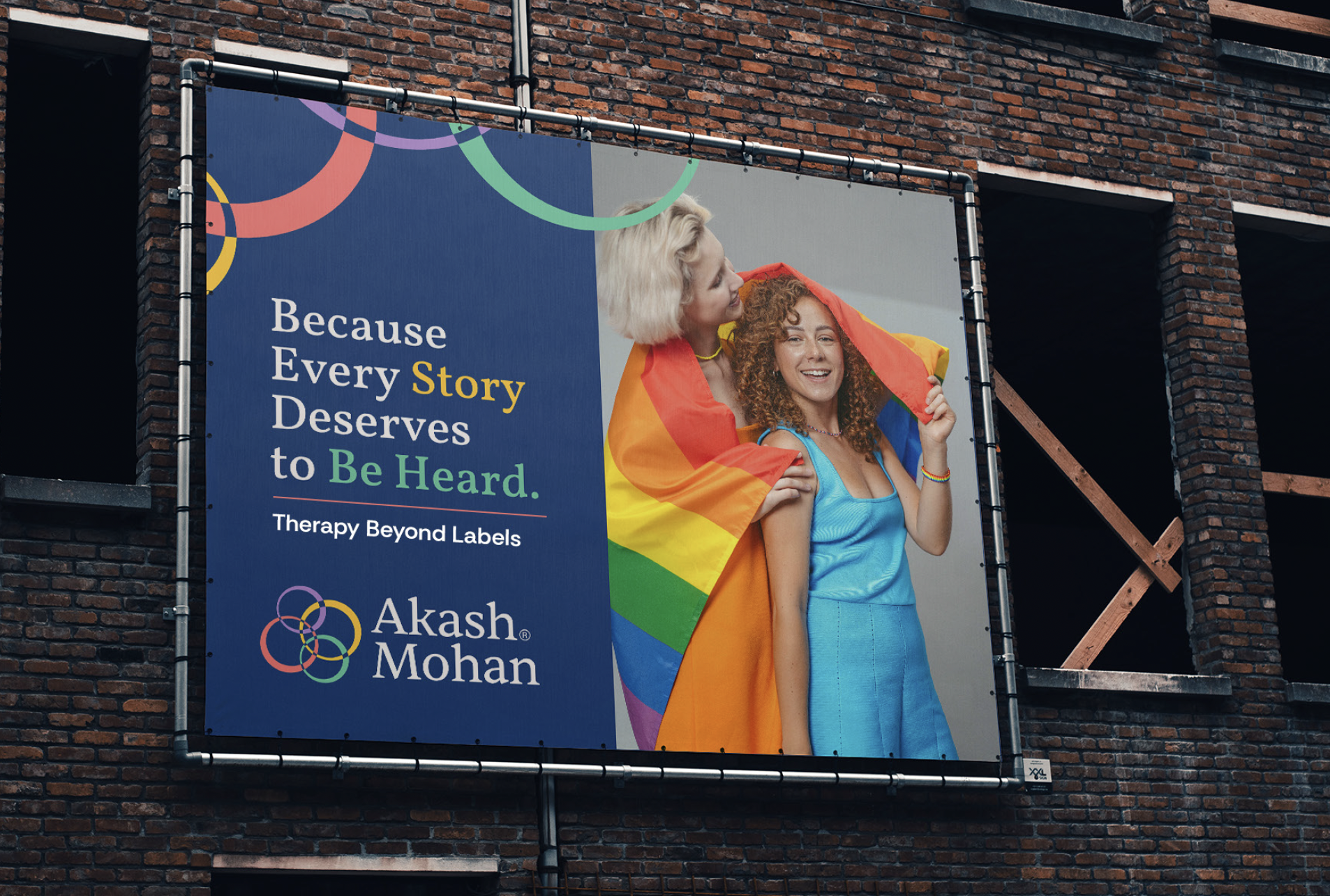

THERAPY BEYOND LABELS
Welcome to a space where therapy is not centred on what is “wrong” with you. It is grounded in understanding what has happened to you, what you have held for years, and how your story continues to shape the present.
This work does not begin with fixing or correcting. It begins with witnessing what has been silenced, recognising the impact of trauma across time, and creating a safer ground where your voice, choices, and pace are honoured.
Why I Started Therapy Beyond Labels?
I mean beyond the violence of being reduced.
Beyond the gaze of systems that classify some lives as disordered, and others as worthy.
Beyond the binaries of functional or dysfunctional, normal or broken.
In this work:
- There is no diagnostic checklist that decides whether you deserve care.
- There is no expectation to be palatable, neat, or ‘recovered.’
- There is only context, connection, and collaboration.
This practice does not treat you in isolation. It sees you relationally—in the thick web of caste, queerness, gender, class, ability, and survival.
Therapy Beyond Labels didn’t begin as a brand or a framework. It began as a quiet discomfort I carried through many of my early clinical encounters. The moments when I felt the limitations of systems that wanted me to name, fix, or classify what someone was going through before I had even listened. The more I worked, the more I realised that people weren’t looking for labels. They were looking for language. For context. For safety. For resonance.
This space emerged from that realisation. From witnessing how people often shrink in the presence of labels that don’t account for their histories, their caste location, their queerness, their grief, their rage, or their joy. From noticing how therapy, when stripped of connection and complexity, can unintentionally echo the very systems that harmed them in the first place.
Therapy Beyond Labels is my refusal to contribute to that. It is a space shaped by everything I’ve unlearned and re-learned, not only as a therapist but as someone trying to hold care responsibly. It is where nuance is not seen as a threat to clarity, where there is room for both contradiction and coherence, and where we honour the fact that healing doesn’t always look like progress.
This isn’t a method. It is a commitment. A commitment to seeing people not as problems to be solved but as stories still unfolding. A commitment to holding therapy as a space of witnessing, not judgment. Of relationship, not correction. Of care, not control.
What does it mean?
Therapy beyond labels means stepping away from the urge to name, diagnose, or fix. It is a practice of listening to stories rather than symptoms, honoring distress without reducing it to disorder, and being with pain without trying to erase it.
In a world that is quick to label and slow to listen, this approach asks—
What if you are not a problem to be solved, but a person to be met?
Rather than fitting you into a pre-decided category, we explore the social, political, relational, and historical contexts that shape your experiences. This is therapy that resists binaries—functioning vs dysfunction, healthy vs unhealthy, normal vs abnormal—and makes space for complexity, contradiction, and multiplicity.
What this approach invites you into:
- A space where your experiences are more important than your symptoms
- A process that centers meaning-making, not measurement
- A relationship where power is shared, not imposed
- A language of care, not correction
- A journey of co-creation, not compliance
- Prioritising emotional, relational, cultural, and systemic safety
- Understanding trauma as a response to what happened, not what is wrong with the person
- Recognising the influence of caste, gender, sexuality, disability, and structural oppression on trauma
- Supporting agency, choice, and pacing in every session
- Avoiding pathologising language
- Centering co-regulation, grounding, and stabilisation
- Inviting clients to define meaning on their own terms
- Treating all behaviour as adaptation and all emotions as valid communication
- Working with core wounds, attachment ruptures, and meaning-making
- Identifying survival strategies and updating them with care, not judgment
- Attending to the body without forcing catharsis
- Working only when stabilisation and safety are present
- Tracking pacing, consent, and threshold
- Integrating trauma work with relational and contextual narratives
- Supporting clients to move from surviving to integrating, not “healing” as an outcome they must achieve
Because you deserve more than a label. You deserve to be understood in the richness of who you are and the world you navigate.
We do not begin with assumptions—we begin with Safety & Curiosity.
We do not begin with assumptions. We begin with curiosity.
We do not seek compliance. We seek collaboration and choice.
We do not pull you away from your communities. We hold space for interconnectedness, culture, meaning, and the stories that shaped you.
In this space, therapy is not an instrument of correction. It is an act of reclamation. It is a political, relational, and deeply personal commitment to witness lives as they are lived, not as they are pathologised. Guided by postmodern, narrative, trauma-informed, trauma-focused, queer-affirmative, and anti-oppressive frameworks, this work holds a radical truth. You are not a collection of symptoms to be managed. You are a person carrying histories, memories, relationships, adaptations, and stories that deserve dignity, nuance, and voice.
Trauma-informed care shapes the way safety is created here. It recognises that every emotion, every silence, and every survival strategy once had a purpose. It resists the idea of fixing and instead honours the wisdom of the body and the intelligence of adaptation. Trauma-focused therapy enters the work only when you are ready, offering structured support to meet painful experiences with care, clarity, and pacing that never overwhelms. This is a space where we attend to what hurt you without collapsing you into the hurt, where stabilisation, grounding, and consent guide every step of deeper processing.
Mental health is never separated from the world you live in. It is shaped by caste, gender, sexuality, disability, neurodiversity, labour, migration, violence, and care work. Here, oppression is not treated as background noise. It is recognised as part of many people’s distress. Healing therefore becomes a liberatory, relational, and justice aligned process rather than an individual task.
This is therapy beyond diagnosis.
Beyond the idea of normal.
Beyond shame.
This is Therapy Beyond Labels.
The Core Philosophy Behind This Therapy Beyond Labels
This is not therapy built on correction, compliance, or clinical neutrality. It is therapy grounded in care, collaboration, and context. Each session centers your voice, your pace, and your lived realities.
- Choice — you decide what feels right to explore
- Collaboration — we co-create, never prescribe
- Context — your story exists within systems, not in isolation
- Connection — healing happens in safe, attuned relationships
- Compassion — no part of you is too much here
- Curiosity — we ask, reflect, and wonder together
- Clarity — so you always know what we’re doing and why
- Care — everything begins and ends with care
The Person I’m With
What parts of your story haven’t had space to be heard yet?
I don’t work with symptoms — I work with people. Each person who sits across from me brings not just their pain, but their history, relationships, culture, survival, and resistance.
I meet you as you are — with your contradictions, your questions, your coping, and your complexity. I listen for the story underneath the story. I’m not here to assess or correct you. I’m here to be curious with you.
Whether you’re navigating trauma, loss, identity, burnout, or something that doesn’t have a name yet — my focus is on relationship, not repair. Therapy with me is a space where you don’t have to be “better” to be worthy of care.
Who I Work With
I work with individuals and relationships navigating emotional, relational, and systemic complexity — whether that’s rooted in identity, life experiences, or the search for meaning.
I primarily work with folks from late adolescence to late adulthood across diverse genders, sexualities, and life paths. You don’t need a diagnosis, a breakdown, or a clear goal to start therapy here. If you’re carrying questions, longings, pain, or uncertainty — you’re welcome.
This includes, but isn’t limited to:
If you are holding a story that has never had space, you are welcome here. If you are carrying a story that feels too heavy to hold alone, you are welcome here. If you are simply trying to understand yourself in a world that has not always been kind, you are welcome here.
- Navigating anxiety, low mood, shame, isolation, numbness, or emotional disconnection
- Queer, trans, non-binary, or questioning and seeking an affirming therapeutic relationship
- Exploring or practicing consensual non monogamy, polyamory, or other forms of relationship diversity
- Processing trauma, including developmental trauma, relational trauma, systemic harm, caste based trauma, medical trauma, and experiences of violence or neglect
- Moving through identity transitions, life disruptions, grief, endings, or emotional overwhelm
- Feeling erased, misunderstood, or pathologised in earlier therapy experiences
- Curious about themselves, their patterns, their histories, or the meanings they have carried, even if they are unsure where to begin
Core Foundations of My Approach
My work is grounded in the belief that therapy must be collaborative, context aware, trauma informed, and centred on your lived experience. It is never shaped by checklists, diagnoses, or a search for what is wrong. It is shaped by your stories, your pacing, your body’s wisdom, and the systems that have influenced your life. These are the guiding frameworks that hold this practice.

Narrative, Postmodern, and Relational Approaches
We make meaning through the stories we carry, the identities we inhabit, and the histories we inherited. Narrative work helps us explore these stories with curiosity and intention, noticing what shaped them and what possibilities exist beyond them. I do not position myself as the expert of your life. My role is to walk with you, reflect with you, and help you make sense of your experiences without reducing you to symptoms or labels. Your voice, your pace, and your meaning making remain at the centre.

Trauma Informed and Trauma Focused Practice
Trauma is not only what happened to you. It is also what was missing, such as safety, choice, protection, and support. A trauma informed space means that we move slowly, honour boundaries, prioritise grounding and relational safety, and respect your nervous system. Trauma focused therapy becomes part of the work only when you feel ready and resourced. This includes approaches informed by developmental trauma research, trauma focused acceptance and commitment therapy, and contemporary stabilisation and parts based frameworks. The aim is integration and clarity, not catharsis or re exposure. You hold choice at every step.

Queer Affirmative and Anti Oppressive Practice
Your identity, gender, sexuality, relationship structures, and embodied experiences are welcomed and affirmed without question. This practice recognises how caste, class, disability, religion, fatness, neurodivergence, and systemic violence shape mental health. Distress is often a response to harm, not a personal failure. Together, we make space for both the personal and the political, the emotional and the structural, with dignity and care. Therapy becomes a place where your truth is seen without minimisation and your story is held without pathologisation.
Why I Practice This Way
Most mental health systems are built around categories, diagnoses, and “fixing” people. I practice differently.
I believe distress is not always a symptom. It is often a response — to trauma, to isolation, to injustice, to silencing.
My work centers story, relationship, and context — not pathology. You are not a diagnosis here.
Is This The Right Space For You?
This space might feel right for you if:
- You want to be met in your full complexity and not reduced to a diagnosis or a problem.
- You feel drawn to understanding your stories, patterns, and possibilities rather than settling for symptom control alone.
- You value care that is trauma informed, trauma focused when needed, and deeply aware of context and systems.
- You want a therapist who affirms queer identities, neurodivergence, relationship diversity, and other non traditional life paths.
- You are open to reflection, conversation, discomfort, slowness, and the co creation of your path forward.
- Therapy here grows through collaboration rather than compliance. It invites curiosity rather than correction. It honours the pace of your body, your story, and your readiness.
This might not be the best fit if:
- You are seeking a diagnostic report, clinical certification, or any form of formal mental health label.
- You expect quick fixes, linear progress, or protocol driven treatment.
- You prefer top down advice, prescriptive guidance, or structured homework every session.
- You want therapy that avoids social, political, cultural, or systemic context.
- You are uncomfortable with open ended exploration, uncertainty, or a non linear therapeutic process.
- You need a highly structured, goal focused, or medicalised approach.
If this space resonates with your needs, your story, and your hopes, you are welcome to begin.
Therapy Beyond Labels: Policies and Practice Framework
Therapy Beyond Labels is not just a philosophy — it is a living, breathing practice built on transparency, care, and accountability. Every idea that shapes this space is translated into clear, written policies that ensure safety, trust, and shared understanding.
This section brings together the key practice policies that guide how therapy happens here — from informed consent and confidentiality, to session recording, digital safety, payment structures, and data protection. Each policy is thoughtfully written, trauma-informed, and reviewed regularly to stay aligned with evolving ethics, laws, and community needs.
Having these policies accessible is part of how safety is created — not by secrecy, but through shared information and awareness. You are always invited to read, ask questions, and understand the frameworks that hold our work together.
Caring for myself is not self-indulgence, it is self-preservation, and that is an act of political warfare.

Audre Lorde
American writer, professor, philosopher, intersectional feminist, poet and civil rights activist
Not sure where to begin?
Let’s figure it out together.
- Choose a pace and mode that works for you
- No pressure to have it all figured out
- Come as you are — bring whatever feels real